


OSI offers two options for securely storing files from your computers.
Due to limited storage space, the internal cloud is used to back up important documents that you want to recover in case of loss:
- OwnCloud allows synchronization of one or more directories with a user-specific directory on the organization’s server, but this requires installing software on the workstation. You can also access a web interface to manage, upload, or download files without the client.
- Samba and a VPN system allow you to connect a network drive to access a directory with your files.
Procedure to use this service:
* Send a message to it-service osi-ngo.org
* The service center determines the best solution for file backup with the requester
* Solution implementation
* Follow the recommendations
Cloud (OwnCloud)
OwnCloud is an open-source software solution installed on both an organization server and the client device.
This solution enables synchronization of one or more directories on a computer, laptop, or tablet.
The latest version is saved in your directory, but you can revert to previous versions through a history log.
Each user has a storage quota (5/10/20 GB).
You can also access the interface via a web browser to manage files and/or share them with a link.
The web interface is multilingual.
OwnCloud Installation/Usage
- The service center provides the user ID and password to access the web interface and set up the client.
- Access the web interface with a browser to confirm that the account is accessible.
The address is as follows: <>http://cloud.osi-ddlc.org/
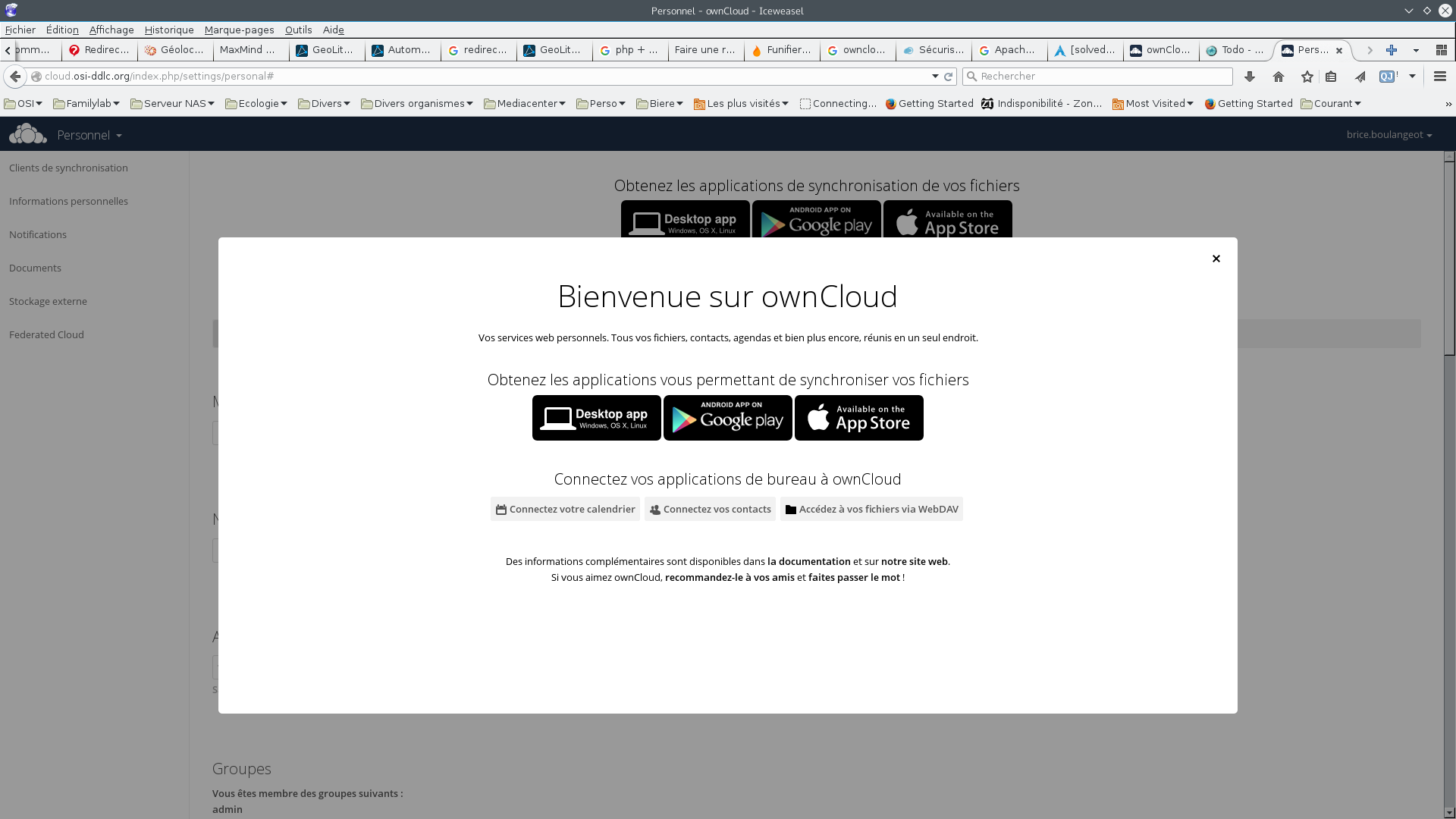
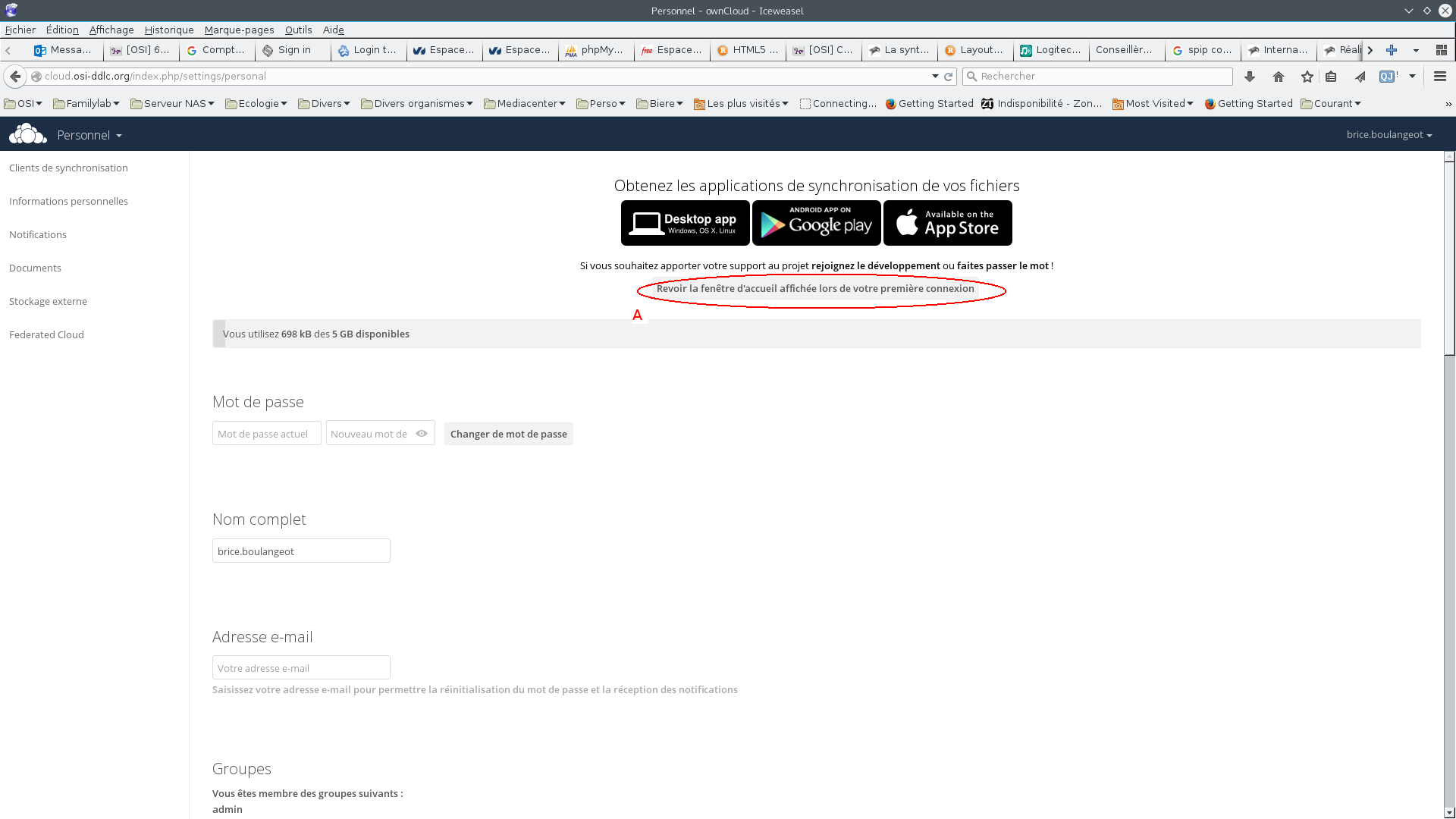
On first access, the browser will indicate that the associated security certificate is unverified. This is normal because it is a self-managed certificate. Accept and authorize this certificate. - The first screen displays a link to download the client for the destination platform type (tablet/smartphone or computer - Windows/Apple/Linux/Android). You can return to this screen later by accessing “Personal” (see red circle A).


- During client installation, you’ll be prompted for the user ID and password and the directory(s) to sync. For this option, it’s best not to specify a directory immediately so you can define a cloud sync folder that’s different from the default (Documents).
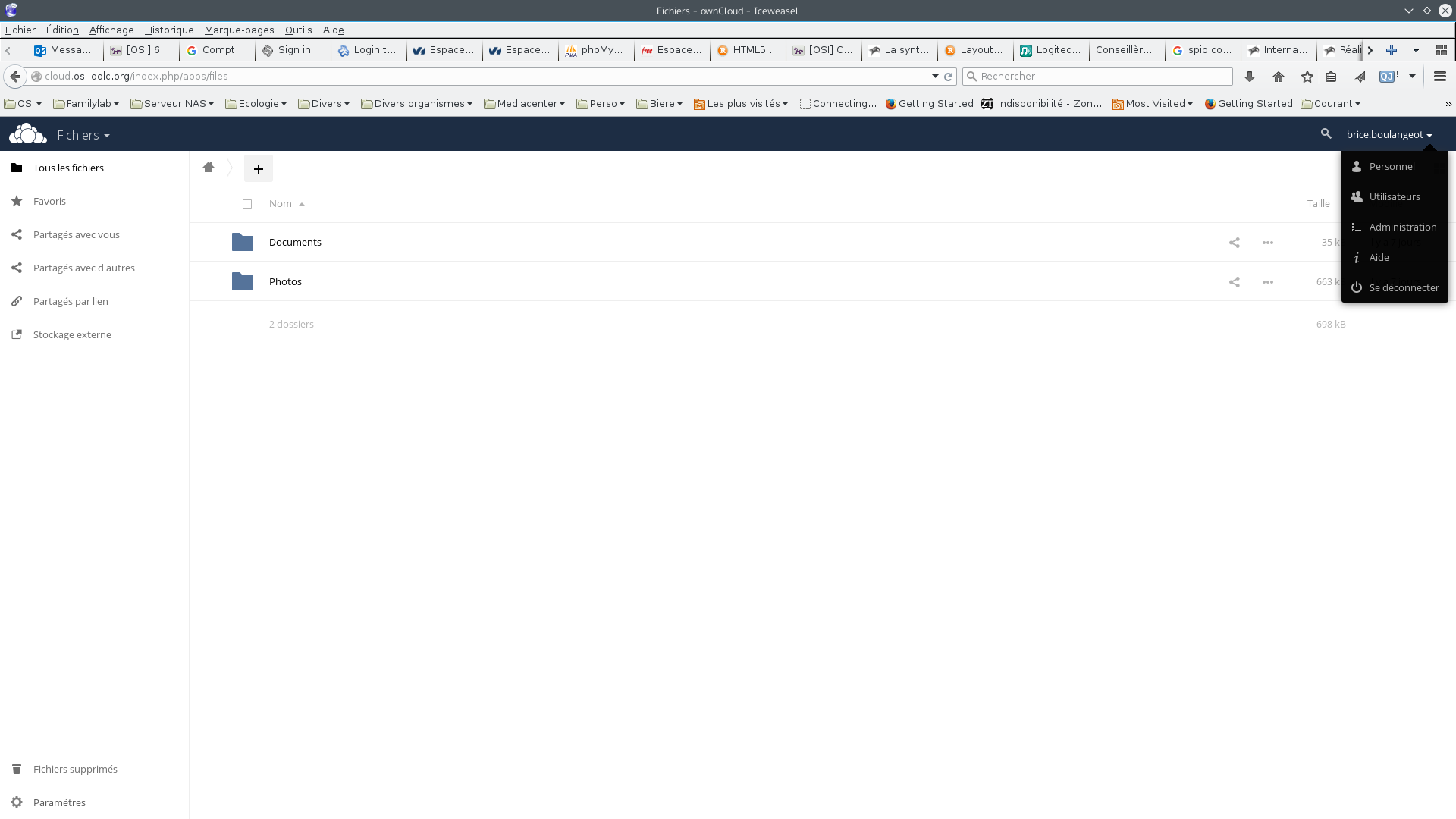
Create a folder for each synced device (e.g., pc_windows / smartphone). - The default screen after login shows synced folders, allows file uploads, folder creation, and settings adjustment (password, avatar, etc.) by accessing “Personal” on the right.

Network Directory (VPN + Samba)
The network directory is a resource defined solely for the user.
You manage synchronization by manually uploading or removing files for backup.
The version on this drive is a copy of the file at the upload time and may lag behind the current version if not updated.
This directory is not physically on the workstation, so it is inaccessible without activating the network and network drive.
There is no sharing mechanism with other users.
Recommendations
- Do not back up the entire workstation; only essential documents
- Do not upload files that violate current laws
- Regularly clean up your storage space (obsolete files)
- Never share your password for access to backup resources (especially with external persons), as this could compromise the security of all users’ data.
